


Mondays with your MD – Getting to the root of your healthcare concerns
Are you frustrated with the existing health care system? Is your doctor treating your individual symptoms but not helping you find the root cause for the constellation of symptoms you have? Are you wondering if your health care needs might require an integrative approach?
Roots Health DPC provides a patient-centered approach that engages the whole person; nourishes the mind, body, and spirit; and encourages the conscious creation of personal health and wellness. Patients have constant direct access to board-certified medical care with ample time to fully evaluate and treat the root cause of symptoms.
Did you know that the average length of time spent in an office visit to cover patient concerns and circumstances is 7 minutes in the traditional insurance-based health care model? That’s right… 7 minutes! It is no small wonder that the typical health care experience feels piecemeal and rushed. You would not expect your mechanic to diagnose, let alone treat, your car problem in 7 minutes…. so why do we accept this substandard care for our own health and well-being?
At Roots Health DPC, we know that your health is the most important thing. It is the foundation for living life on your terms.

Why should you consider direct primary care for your health care?
Quality time
Quality time to understand your health care needs with your physician and create an individualized health care plan. We focus on the whole patient as a unique individual –taking into account each element of a person’s health, environment, and lifestyle.
Communication
Communication with your board-certified physician that is easy and ongoing making it simple to adjust the plan as necessary to meet your health care needs. Unlimited physician access and visits… in office and virtual
No Waiting. No Copays. Ever.
Affordable Transparent Pricing.
A low monthly membership fee provides unlimited direct access to your physician to work with you as a team to obtain and maintain your optimal health and well-being. Steep discounts on labs, medications, supplements, and imaging.
Sign up here to make sure you never miss a “Mondays with your MD” post
Mondays With your MD – New Covid Vaccine: Bivalent Boosters
The new bivalent booster offers better protection against recently circulating COVID-19 variants and helps restore waning protection from previous vaccination. It offers broader protection for new variants. People must complete the primary series (original monovalent vaccines) before getting a bivalent booster dose.
Who should get the new booster?
- People 12 years and older should receive the updated Pfizer or Moderna (bivalent booster)
This includes people who have received all primary series doses and people who have received the original (monovalent) boosters - At this time children ages 12-17 years can only receive the updated Pfizer bivalent booster.
- Children under 12 years do not get a bivalent booster yet.
What is considered “Up to Date” with all these boosters?
Once you have completed the covid-19 vaccine primary series and received he most recent booster dose that is recommended
When should I get the new booster? Which brand should I get?
The new bivalent booster can be given at least 2 months or more after your last COVID vaccine. The monovalent booster should no longer be given to anyone 12 years of age and older.
It is fine to get a booster from a different brand than the primary series or previous boosters. For example, if your primary series was Moderna you can get the Pfizer bivalent booster.
What about kids under 12 years old?
At this time, children under 12 years old will NOT receive the new bivalent booster dose although this is likely to change in the future.
Children 5 years – 11 years who received Pfizer for their primary series should still get a monovalent booster 5 months after the last dose of the primary series.
Children 5 years – 11 years who got Moderna for their primary series do not get a booster at this time.
Children 6 months – 4 years should get all COVID-19 vaccination primary series doses.
Sign up here to make sure you never miss a “Mondays with your MD” post
Mondays with your MD – Covid … Again? What you need to know
There seem to be more cases of COVID circulating in our community now… so I thought I would share the most common questions and concerns I hear from patients.

My family member has COVID. How often do I need to test myself?
- If you develop symptoms it is recommended to test immediately.
- If you have symptoms and your rapid test is negative it is recommended you obtain a PCR test.
- If you do not have symptoms, you should wait at least 5 days after your exposure to do testing.
- If you are vaccinated and do not have symptoms you do not need to isolate before testing.
Can I really get COVID again? I already had it.
Yes. Everyone 12 years of age and older can receive an updated COVID booster which targets the new COVID variants. Although your disease may not be as severe, you can still catch COVID and pass it to others who may be more vulnerable.
My COVID test is positive… still.
Some patients believe they need a negative test to return to work. The truth is that once you have a positive test there is no reason to repeat a test. The isolation period is 5 days and can last up to 10 days depending on the severity of your illness. If your isolation ends on day 5, you should intentionally wear a mask whenever you go in public until the full 10 days has elapsed.
What is Paxlovid and does it work?
Paxlovid is one of the medications used to treat COVID. It is highly recommended for those at risk for disease progression and it significantly decreases the severity of the disease. Do not delay seeking care as this treatment must be started within days of when you first develop symptoms to be effective.
When you have questions about urgent health concerns, you want accessible advice from your physician. Wouldn’t it be great if you could just text your doctor and ask? At Roots Health DPC that is how we provide medical care! We are available to our patients by phone, email, and text anytime. Schedule a FREE “Meet and Greet” at Roots Health DPC to find out more.
We are now accepting new patients and would love the privilege of serving you in our clinic.
Mondays with your MD – Who gets sleep apnea?
Did you know that trouble concentrating, headaches, urinating frequently at night, and many other symptoms can be caused by sleep apnea? Unfortunately, sleep apnea is often misdiagnosed in women.
Learn about sleep apnea and signs that it might be affecting your health.

Who gets sleep apnea?
Both men and women can have sleep apnea. Sleep apnea is commonly under-diagnosed in women because they do not present with “typical” symptoms. Often, women’s concerns are “dismissed” by their physician. Some doctors may have preconceived notions about what a typical sleep apnea patient looks like, and may overlook the reported symptoms by women when they don’t fit the common portrait. Education is key and allows women to advocate for their own health care needs.
What are the symptoms of sleep apnea?
Snoring is the most obvious sign but it is more common in men. Other signs and symptoms of OSA (Obstructive Sleep Apnea) include:
- Daytime sleepiness or fatigue
- Restlessness during sleep, frequent nighttime awakenings
- Sudden awakenings with a sensation of gasping or choking
- Dry mouth or sore throat upon awakening
- Cognitive impairment, such as trouble concentrating, forgetfulness or irritability
- Mood disturbances (often dismissed as depression or anxiety which can co-exist with sleep apnea)
- Night sweats
- Frequent nighttime urination
- Sexual dysfunction
- Headaches
How is sleep apnea diagnosed?
Speak with your primary care physician about your symptoms. If your doctor determines that you have symptoms suggestive of sleep apnea, you may be asked to have a sleep evaluation with a sleep specialist or an overnight sleep study to objectively evaluate for sleep apnea.
How is sleep apnea treated?
The treatment for sleep apnea is extremely individualized and based on the underlying cause for the sleep apnea. Most commonly the cause of the obstruction to the airway is treated. In a many cases the airway obstruction can be relieved with conservative therapies targeting the underlying cause.
These may include:
- Weight loss
- Sleep position changes
- Treatment for underlying sinus or nasal congestion
Additional therapies utilized (based on the underlying cause of the sleep apnea) include:
- CPAP (continuous positive airway pressure) machines or other mechanical therapy
- Dental appliances that keep the airway open
- Surgical procedures are usually reserved for unresponsive cases
Diagnosis and treatment for sleep apnea are important for your long term health. If you are looking for a physician who spends the time required to evaluate your health concerns and will get to the root of the your health care needs, schedule a FREE “Meet and Greet” at Roots Health DPC.
We are now accepting new patients and would love the privilege of serving you in our clinic.
Mondays with your MD – Back-to-school Health Tips
It’s that time of year again! Today we can review how to help children have a successful year.

Focus on Nutrition
Packing a healthy school lunch is key for giving your child a healthy energy boost during their school day.
High protein foods (yogurt, cheese, beans, hummus) with fresh vegetables and fruits are best.
Avoid empty calories added from sugars and solid fats.
Hydrate with water. Drink the number of 8oz cups daily equal to age. (5 cups for 5 year old)
Make Sleep a Priority

Most healthy children need EIGHT TO TEN HOURS of sleep each night
Put away electronic devices at least one hour before bedtime
Encourage children to read a book before bedtime
Eating a light healthy snack before bed can be beneficial, but avoid caffeine
Learning Styles and Behaviors
Now is a good time to schedule an annual exam with your doctor
Review any questions or concerns you may have about age-appropriate behavior, developmental milestones, and learning needs that can affect your child’s ability to learn in a classroom
Vision Screening is important. If your child is squinting, tilting head and holding handheld devices too closely are just some of the signs your child may have a vision problem.
Exercise: Get Active
School age children need 60 minutes or more of moderate-to-vigorous intensity physical activity each day
Encourage sports and outdoor activities after school
Walk or Bike to school
It is an exciting time with lots of changes to the routine. Parents play a key role in helping children make a successful transition.
Mondays with your MD – HPV: What you should know
Human Papilomaviurs, or HPV, is the most common sexually transmitted infection (STI) in the United States.
70- 80% of women will get at least one type of HPV at some point in their lifetime. HPV can cause cervical cancer.
The following questions and answers address what you need to know about HPV and screening for cervical cancer:
What is human papillomavirus (HPV)?
HPV is a group of viruses that can be passed through sexual contact. The types that infect the genital area are called genital HPV.
Who gets HPV?
Genital HPV is the most common STI in the United States. It is so common that 70-80% of women will get at least one type of HPV at some point in their lifetime.
What are the symptoms of HPV?
Most people with HPV do not have any symptoms which is why women need regular Pap tests starting at age 21. The Pap test can find changes on the cervix caused by HPV. If you are a woman between ages 30 and 65, you can also do a DNA test for HPV strains of the virus that cause cervical changes.
HPV infections can sometimes cause genital warts. Genital warts usually appear as a small bump or group of bumps in the genital area and physicians can usually diagnose warts by looking at the genital area.
What health problems can HPV cause?
HPV usually goes away on its own and does not cause any health problems. But when HPV does not go away, it can cause health problems including: cervical cancer and genital warts most commonly.
Do I need to get tested for HPV?
- If you are 21 to 29 years old, your doctor might suggest the HPV test if you have had an unclear Pap test result. Most women younger than 30 do not need the HPV test, because the immune system fights off HPV in the vast majority.
- If you are 30 years or older, you may choose to have the HPV test and Pap test to screen for cervical cancer. If both tests are normal, the chance of getting cervical cancer in the next few years is very low and often you can wait up to five years for your next HPV screening.
How can I prevent HPV?
There are two ways to prevent HPV. One way is get an HPV vaccine. The other way to prevent HPV or any STI is to avoid sexual contact with another person.
If you do have sex, lower your risk of getting an STI with the following steps:
- Use condoms. Condoms are the best way to prevent STIs when you have sex.
- Limit your number of sex partners. Your risk of getting STIs goes up with the number
of partners you have.
If I get the HPV vaccine, do I still need to use a condom?
Yes. The vaccine does not replace or decrease the need to wear condoms. Using condoms lowers your risk of getting other types of HPV and other STIs.
Do I still need a Pap test if I got the HPV vaccine?
Yes. There are three reasons why:
- Although the HPV vaccine protects against many of the HPV types that cause cervical cancer, it does not prevent all HPV types that cause cervical cancer.
- You might not be fully protected if you did not get all the vaccine doses (or at the recommended ages).
- You might not fully benefit from the vaccine if you were vaccinated after getting one or more types of HPV before vaccination.
Talk to your doctor today about HPV screening
Mondays with your MD – Monkeypox: Questions and Answers
Monkeypox is caused by a virus that is usually not serious, though the rash is painful and can cause scarring.
Although a public health emergency, Monkeypox disease is not similar to COVID and no one should panic.
What is monkeypox?
Previously, monkeypox was known as a rare disease. It was first seen in humans in 1970 and caused by an infection with the monkeypox virus (a part of the same family of viruses as smallpox). The disease is milder than small pox symptoms and it is rarely fatal. Monkeypox is usually a self-limited disease that lasts 2-4 weeks.
What are the symptoms of Monkeypox?
- Headaches
- Muscle aches
- Exhaustion
- Fever
- Sore throat, cough, congestion
- Swollen lymph nodes
- Rash
What does the rash look like?
The rash can be extremely itchy or painful and goes through different stages before forming a scab and healing. It can be located near genitals but also on hands feet and other parts of the body.

How does the virus spread?
- Through close skin to skin contact
- Contact with surfaces used by someone with monkeypox (shared towels for example).
- Direct contact with rash or body fluids from someone with monkeypox.
How can I protect myself?
- Limit contact by avoiding close skin to skin contact of persons with a rash.
- Do not share utensils, plates, or cups with person who has monkeypox.
- Do not handle bedding towels or cloths with person who has monkeypox.
- Wash hands frequently.
- The vaccine is limited and recommended for people who have been exposed to monkeypox.
Mondays with your MD – Just Tired or Fatigue?
Why am I always tired? How tired is too tired?
Today we are exploring the difference between “being tired” and fatigue which often underlies a more serious medical problem.
Tiredness happens to everyone – it’s an expected feeling after certain activities or at the end of the day. Usually, a good night’s sleep solves the problem.
Fatigue is a daily lack of energy – unusual or excessive whole-body tiredness not relieved by sleep. Fatigue can prevent a person from functioning normally and affects a person’s quality of life.

What are the most common causes of fatigue?
Lifestyle Factors
Taking an honest inventory of things that might be responsible for your fatigue is often the first step toward relief.
Evaluating the following can have an enormous impact on levels of fatigue:
- Exercise
- Nutrition
- Alcohol use
- Medications
- Routines
Modifications can often dramatically impact levels of fatigue.
Medical Factors
Underlying Medical Conditions that commonly cause Fatigue:
- Anemia: iron deficiency anemia is a common blood disorder that makes it hard for your blood to move oxygen to your organs.
- Thyroid problem: this small butterfly-shaped gland that sits in your neck regulates your metabolism and energy levels. When thyroid gland out of whack, you’re out of whack.
- Depression: untreated and undiagnosed depression can rob your brain of the chemicals needed to work its best causing low energy levels and fatigue.
- Infections, Sleep Apnea, Heart Disease are common problems that can manifest the symptom of fatigue as well.
Recap
Many physical and mental illnesses, as well as lifestyle factors, can cause your fatigue, and that can make it hard to diagnose. In some cases, it might be something simple and easy to fix, like having caffeine at bedtime. But other causes, like heart disease or COPD, are serious, and you may need to start long-term treatment right away.
Your doctor can help you sift through your health issues, as well as diet, exercise, and other lifestyle habits, on order to zero in on the cause and help you on the road to recovery.
Mondays with your MD – Urinary Tract Infections: Separating Fact from Fiction
Urinary Tract Infections
Urinary tract infections, or UTIs, are extremely common, especially in women. Dealing with them is no fun and often requires frequent trips to the bathroom, pain when urinating, and soreness in the lower abdomen, back or sides. Many turn to at-home remedies to tackle discomfort or try to change risky behaviors to avoid a repeat infection.
Unfortunately, there are plenty of myths out there about UTIs that can make recognizing the causes and finding effective relief difficult.

Separating Fact From Fiction
Myth #1: Taking AZO for my UTI is “Good Enough”
Although AZO may provide symptomatic relief, it can often mask underlying symptoms and delay seeking appropriate medical care. In addition, it can cause discoloration of urine making the infection more difficult to detect on examination.
Myth #2: Tampons Cause UTIs
Some women think tampons make them more prone to developing UTIs since tampons are placed inside the body, while other feminine hygiene products are kept outside of the body. However, tampon use may be even more effective at preventing UTIs than pads. Tampons can keep the area dryer, leaving less of a chance for bacteria to flourish and cutting down on the risk of infection.
Myth #3: Cranberry Juice Will Cure My UTI
The cranberry juice cure is one of the most commonly believed myths about treating UTIs. However, don’t for a minute think that a bottle of cranberry juice can replace a visit to your doctor or proper medication. It turns out cranberry juice isn’t nearly as effective as many people think.
Though some studies have demonstrated potential ability to prevent (not treat) symptomatic UTIs, there isn’t sufficient data to support routinely recommending it.
Myth #4: Only Women Get UTIs
Women definitely get UTIs more often than men. This is because the urethra, the duct that carries urine out of the body, is shorter in women, allowing bacteria to more easily reach the bladder. However, this is still a myth, as men can and do get UTIs. UTIs are more common in men who have not been circumcised and suffer from other medical issues including incontinence, prostate cancer or urinary tract stones.
Myth #5: Sex Causes UTIs
This one is both a myth and a fact. The real myth lies in the belief that only sexually active women get UTIs. Sex can definitely play a role, though, as bacteria near the vagina can inadvertently get into the urethra during sexual contact. Urinating after sex is CRUCIAL because it will allow your body to flush out vaginal bacteria that tends to get pushed into the urethra during sex.
Does this mean that abstinence is a sure-fire way to protect yourself from UTIs? Think again. In fact, women are most at risk for getting UTIs while pregnant or experiencing menopause or perimenopause. This is due to the change of hormones in the urinary tract during these times.
Talk to your doctor about UTI symptoms and appropriate treatment.
Mondays with your MD – Telemedicine: Back to the Future
Reminiscent of a time where patients could receive medical advice by simply calling their doctor on the phone….telemedicine, popularized with the pandemic, has always been a structured integral part of Direct Primary Care (DPC). Virtual care has been shown to increase access to health care and lead to improved health outcomes when utilized correctly.
Telemedicine
Telemedicine allows for an ongoing dialogue between patients and physicians about shared health goals and decision-making. This improves adherence to the medical plan of care by providing a platform for a collaborative approach to health, where chronic conditions can be managed.
Telemedicine provides flexibility for scheduling and eliminates barriers between physicians and patients. Follow up appointments are made easier by removing travel times, childcare concerns, and time off work.

Virtual consultations can prevent unnecessary in-person referrals to specialists and lead to shorter waiting times to see specialists.
Telemedicine has always been a structured integral part of (DPC). When patients have an urgent care need or a follow up concern from previous visits, DPC physicians are able to quickly troubleshoot those problems with patients and determine the best course of action for each individual.
Mondays with your MD – Women’s Rights to Reproductive Health Care in 2022
I am grateful today that I live in Illinois, but I do not believe access to health care should depend on where a woman is residing within the US. The disruption to appropriate health care for women has caused chaos in caring for women who are pregnant, and ultimately will lead to preventable deaths of women that will affect the entire nation for generations.
People misunderstand the far-reaching consequences of the ruling by believing abortion to be a simple elective decision to terminate a “normal” pregnancy. This ruling, in fact, threatens the fundamental health care rights of women. It demonstrates HOW IMPORTANT the physician-patient relationship is and why neither government nor insurance companies have any place making health-care decisions.
Reverting to state level laws from early 1900s, immediately following this ruling, has put numerous physicians in an impossible situation wondering how to legally provide appropriate care for their patients. In Utah, for example, the law describes the delivery of anything except a dead fetus as an abortion. Women who are severely infected or hemorrhaging as a complication of pregnancy, with a fetus that has a heartbeat but cannot survive outside of the uterus, have routinely been treated by terminating pregnancy as the standard of care… until now. With the change in law, instead of terminating the fetus and sparing the life of the woman, there will be an additional preventable loss of life. The lives of women will be lost.
In some states, immediately following the ruling, physicians were asked to contact the legal department prior to caring for patients appropriately….this simple delay in care can cost the life of a woman who is hemorrhaging from an ectopic non-viable pregnancy in an emergency care situation.
The supreme court decision eliminates equitable and safe access to medical care and will ultimately lead to higher maternal mortality rates in the US. There is absolutely no space for third parties, government bodies nor insurance companies, in the delivery of health care. These decisions must be made DIRECTLY between patients and their physicians.
“The American Medical Association is deeply disturbed by the U.S. Supreme Court’s decision to overturn nearly a half century of precedent protecting patients’ right to critical reproductive healthcare—representing an egregious allowance of government intrusion into the medical examination room, a direct attack on the practice of medicine and the patient-physician relationship, and a brazen violation of patients’; rights to evidence-based reproductive health services. States that end legal abortion will not end abortion—they will end safe abortion, risking devastating consequences, including patients’ lives….
We will always have physicians’ backs and defend the practice of medicine, we will fight to protect the patient-physician relationship, and we will oppose any law or regulation that compromises or criminalizes patient access to safe, evidence-based medical care, including abortion. As the health of millions of patients hangs in the balance, this is a fight we will not give up.”
Mondays with your MD: Formula Shortage
Formula Shortage
Recently I had a patient reach out to let me know she was unable to locate the formula she routinely provided to her baby. She let me know she was considering feeding her baby with breastmilk from a friend and was concerned about allergens in some of the other formula products.
Nothing is as important to families as the health and safety of their babies. The formula shortage has left many anxious about how to feed them. My guess is that many are thinking about a similar solution. I thought I would share a few recommendations from the American Academy of Pediatrics.

RECOMMENDATIONS
- Consider trying a brand new formula
- Consider trying a formula made in another country
- Talk to your physician about substitutes for hypoallergenic or specialty forumulas (as was the case in the above example)
OPTIONS for HOW to FEED YOUR BABY SAFELY
- Consider discussing using whole cow’s milk if baby is over 6mo
- If baby is close to one year discuss with physician options for toddler drinks
- Consider using local milk bank

AVOID these options
DO NOT share breast milk with friends or purchase on the internet. There are significant infectious disease and storage safety risks
DO NOT water down formula
DO NOT make it at home
DO NOT use expired formula
Mondays with your MD: Headaches and Migraines
June is Headache and Migraine Awareness Month.
Did you even know that was a thing?
There are many reasons people get headaches and most of us have had a headache at some point.
Today we review the most common causes as well as what the most concerning warning signs are and when you should seek immediate care.
Headaches can be due to allergies, caffeine withdrawal and even a life-threatening aneurysm.
Typical headaches are tension-type headaches and migraines.
Tension-Type headaches
Tension-Type headaches are most common and are often caused by the following 3 things:
excessive caffeine intake
alcohol intake
vision problems
It is important to know that headaches
can sometimes be a sign of a life-threatening emergency.

The following signs are reasons to seek care immediately:
You are having your worst headache ever
You have loss of consciousness
You have uncontrollable vomiting
Your headache is worst upon waking
You have loss of vision
Mondays with your MD: What is Direct Primary Care?
People ask me all the time…. What is Direct Primary Care?
Focused on your health.
In a traditional fee for service primary care practice, doctors are paid based on how many people they see, number of tests they order, or type of procedures they do. This leads to our current system of rapid visits with many tests and quick referrals. Many times doctors cannot take the the time to really listen, or think about what is best for your health from the patient perspective. In the existing system, doctors are not reimbursed for emails or phone calls and this creates a system where it becomes difficult to speak to your doctor outside of a harried office visit that you may have been waiting a long time for.
In direct primary care, instead of paying for each visit or procedure, you pay a monthly fee. This monthly fee frees the physician from the model that promotes productivity over quality and allows your physician to focus on you and what you really need. This leads to more time with your doctor when you need it and convenient easy access outside the doctor’s “office visit” by phone, text, email, etc.
The doctor you call. The doctor you trust.
Direct primary care doctors are dedicated to provide the high-quality unhurried care that is essential for your wellbeing and ongoing maintenance of your health. You can see your direct primary care doctor for all routine and preventive services like checkups as well as urgent care and chronic care management. Many times having this relationship with your physician and the access it provides, can save you visits to more expensive venues like the urgent care, hospital or emergency room.
Mondays with your MD: Keeping medications affordable
Medications do not need to be expensive.
At Roots Health DPC, we are making medications affordable for our patients. How?
We buy medications at wholesale pricing and sell them to our patients directly at wholesale cost – without marking them up. We remove the profit takers, pharmacy benefit managers, and retail pharmacies between patients and their medications, effectively lowering the cost of prescriptions by 50% to 90%.
Examples of medications for under $5/month
| Medication | Dosage |
|---|---|
| Metformin | 1000 mg |
| Ibuprofen | 600 mg |
| Lisinopril | 10 mg |
| Amlodipine | 2.5 mg |
| Sertraline/Zoloft | 50 mg |
| Lovastatin | 40 mg |
| Sumatriptan/Imitrex | 100 mg |
| Lortadine/Claritin | 10 mg |

A simple idea to solve a complex problem
DPC stands for Direct Primary Care – we deliver health care services, including medications, directly to our patients. We provide medications at these rates because we believe that the people in our community deserve fair pricing on the medications they need to stay healthy. At Roots Health DPC, we are uniquely qualified to partner with our patients to determine which medications will best treat their medical conditions.
Mondays with Your MD: Gun Violence – A Public Health Epidemic
Firearms are the leading cause of death in children in the United States. Firearm deaths are completely preventable and occur at a rate more than 5x higher than drownings.
Prevention is key… As with any health-related problem, prevention through education is a critical component. Firearms are present in 1/3 of households with children.
- The best way to keep children safe is to NOT have a gun in the home.
- If it is necessary to keep a gun in the home safe storage is critical. Guns should be kept unloaded and ammunition should be stored separately. Both should be locked and inaccessible.
- Parents can speak to caregivers in homes where young children are visiting about guns in the homes where they play.
- Talk to older kids about guns and safety.
In almost every documented case of active shooters, there were warning signs. In 4 out of 5 school shootings at least one other person had knowledge of attackers plan but failed to report it.
9 critical warning signs of violence:
- Suddenly withdrawing from friends, family and activities (including online or via social media)
- Bullying, especially if targeted towards differences in race, religion, gender or sexual orientation
- Excessive irritability, lack of patience, or becoming angry quickly
- Experiencing chronic loneliness or social isolation
- Expressing persistent thoughts of harming themselves or someone else
- Making direct threats toward a place, another person, or themselves
- Bragging about access to guns or weapons
- Recruiting accomplices or audiences for an attack
- Directly expressing a threat as a plan
Advocacy to protect children from gun-violence needs to occur a national level to have meaningful impact.
States with stronger gun laws have less gun violence overall. However, Chicago borders states outside of IL with fewer gun control laws.
Basic measure such as stopping assault weapon sales and advocating for high-capacity magazine limits, alongside ammunition regulation, and required background checks are all important. Increasing gun manufacturer liability is also critical.
Visit https://www.everytown.org/ to learn more about how you can work towards limiting gun violence.
Mondays with Your MD: Health Insurance is not Good Health Care
How accessible is health care in the richest nation? Why Health Insurance ≠ Health Care.
Many patients tell me that they love their doctor but that they cannot get through easily or book an appointment quickly. They pay thousands of dollars annually for “health insurance,” but are frustrated with their inability to access appropriate “health care.” Patients often go to an emergency room or an urgent care to be seen because it is the only option in the existing health care model.
The result: Americans visits the doctor less frequently and have the highest rate of avoidable deaths.
The United States spends 2x as much, per person, as other high-income countries, yet the US continues to have the lowest life expectancy and poorer health care outcomes when compared to other countries. Americans pay hefty premiums to health insurance plans every year. Where do the dollars go and why is health care access awful?
Traditional physician offices incur a large cost for taking care of patient needs outside of the actual patient office visit. For example, making a phone call to provide patient care is not compensated by insurance companies. Several other similar services that are instrumental to good health care include completing forms for patients, ordering and/or reviewing labs, and writing prescriptions. Restrictions placed by insurance companies make it difficult to take care of patients outside of the visit.
What if health insurance was the same as other insurance products?
A good example is car insurance. You expect to pay out of pocket for your gas, oil change, and maintenance/repairs. You have a high deductible low premium insurance that covers you in case of a car accident. In the analogous healthcare model, patients have catastrophic health insurance coverage with low monthly premiums and a high deductible.
Pairing health insurance with health care, through a physician direct primary care office, lowers out of pocket expense and improves health outcomes by providing access to obtain discounted screenings, preventative services, urgent care services, labs, and medications.
Health insurance companies have come between patients and their health. The health system in the United States is broken as evidenced by the out of control spending and health outcomes. Direct primary care offers an alternative that works. Direct primary care aligns values to prioritize patient health care needs with lower costs and better health outcomes. Find a direct primary care near you by searching https://mapper.dpcfrontier.com/
Mondays with Your MD: Skin Cancer Awareness Month
Summer is almost here…. and with it comes lots of outdoor activities. Protecting your skin from the sun is imperative. Did you know that skin cancer is the most common type of cancer?
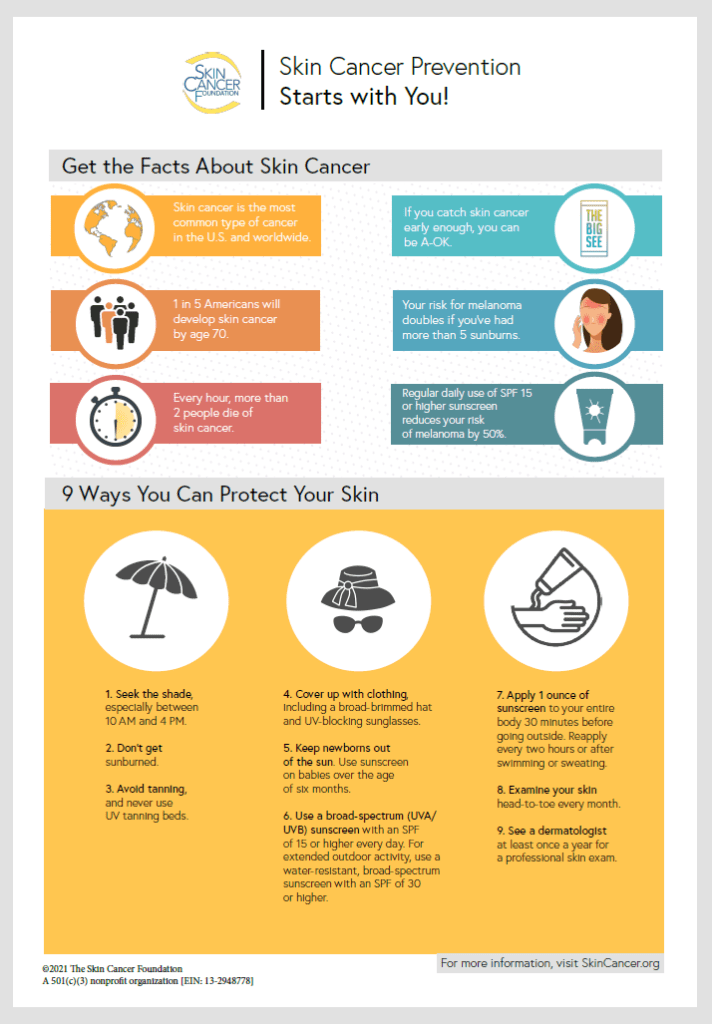
The good news is that skin cancer can be prevented and it can almost always be cured… when it’s found and treated early.
Simple Skin Cancer Prevention Tips:
-Seek the shade between 10am-4pm
-Do NOT get a sunburn
-Use broad spectrum sunscreen SPF 30 or higher and reapply after 2hours
-Examine your skin once a month
Subscribe to our newsletter to learn more and get FREE SKIN CANCER SCREENING
Mondays with Your MD: Transparent Pricing is your Right
Your Rights
We all know that transparent pricing in health care services is rare. It can be different now.
In the traditional health care system, patients often asked me why they had received outrageous bills for their medical care and what they could do about it. I got tired of watching patients struggle with medical bills. I felt powerless in my ability to deliver the health care my patients deserved. Even worse, I knew that the financial health of my patients directly affected their physical and emotional health.
Did you know that medical bills are the most common cause for U.S. bankruptcies? Common sense would dictate that transparent pricing is an integral part of excellent health care.
Most hospitals are still NOT compliant with posting prices to their website even though it has been a law since Jan 1,2021! It is now your right to know the financial implications of the care that you receive.
Excellent health care does not have to be expensive.
There are numerous services that allow you to compare the price of health care. One of my favorite sites is “turquoise.health” where the cost of local medical procedures/tests can be compared.
I believe patients should always know how much a service will cost be before they receive care.
An Example…
At Roots Health DPC, we negotiate lab costs directly with the laboratory and obtain lab studies at significantly discounted prices which are listed on our website. Shortly after we opened our doors we charged one of our first patients $32.45 for a panel of standard labs. When that patient received another bill for $927.86 from the lab she contacted the lab directly and was offered a “self-pay” discount of $250.00. Since the bill was an error, ultimately she did not incur a charge at all. The value of this experience was priceless for my patient and myself as we realized just how wildly variable pricing can be, and just how little transparency exists.
No one deserves to be saddled with an insurmountable pile of medical bills.
All of us deserve transparent pricing and, in fact, it is our right.
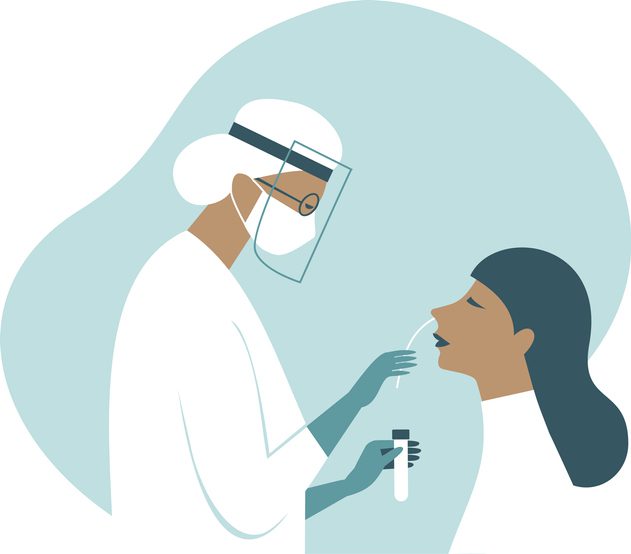
Resuming COVID-19 Testing
>> CLICK HERE TO MAKE AN APPOINTMENT <<
As the number of COVID cases again increases, we are aware that reliable testing has become difficult to obtain. At Roots Health DPC, we have chosen to resume COVID testing for the community to ensure everyone who needs a test has access. We offer PCR testing (and rapid testing for those with symptoms as well). This service continues to be available and free of charge for our members. We will now make it available to the public (non-members) with discounted pricing for testing of families. We remain committed to the health of our community.