

About guest_editor

This author has not yet filled in any details.
So far guest_editor has created 141 blog entries.

Habits

2023-11-27T14:32:43+00:00November 27th, 2023|Uncategorized|

Habits: Directing Your Life Intentionally

Our brains are the most amazing organ. It organizes and integrates an incredible amount of data quickly… allowing us to operate on “auto-pilot” for much of our day. Our brains create well worn pathways so that we can do routine tasks without shifting our focus to them. How to harness the strength of this amazing gift and create the life we want? By understanding HOW to intentionally form our habits.

What is a habit?

Habits are behaviors we perform on a regular basis where some component of the behavior is considered “automatic.” Forming new habits requires repetition.

Developing desired healthy habits is something we can direct our brain to do.

Dr Diaz works with patients to help them build habits and reach their goals.

Habits are pathways in the brain that have formed through repetition. The repetitive pattern starts with a cue from the environment which triggers a behavioral response and is reinforced with a reward. The well known Pavlov’s Experiment demonstrates the principle.

In order to create a new, healthy habit—or even to break a bad habit—you must be as intentional as possible with all three parts: cue, behavior, reward. Manipualting our environment to introduce cues to intentionally associate with a desired behavior and reinforce with a reward is the foundation.

Changing your life habits can be simpler than you may think. With a few tricks, you can gain or lose any habits you’d like.

Understanding these tips will help you stick to healthy habits and break bad ones as you work toward your health and wellness goals. Focus on the cue.

In order to create new habits, we need to focus on the cue, NOT the behavior.

Let’s say you want to start practice daily meditation. Instead of focusing on time meditating, focus on developing the routine around the practice of meditation.

Choose a cue that already occurs regularly in your daily life, such as drinking morning coffee. While developing your meditation habit, focus effort on getting ready to meditate while you brew the coffee. Meditate for 2 minutes. Reward yourself with the coffee afterwards.

Develop the habit of prepping for meditation. Don’t focus on the behavior… you can start with 2 minutes and gradually build up to your targeted time.

After a while, you’ll start to notice that when you get up to get coffee (environmental cue), it takes little to no effort to mediate (habitual response).

You may even start to look forward to it…and feel something in your life is off when you do not meditate…. And that’s the power of habit!

HABITS VS GOALS – Don’t confuse habits with goals.
Goals are great, but putting habits in place that move you toward your goals are key. The goal is the destination and the habit is the journey. Build healthy habits by starting today.

Are you looking for a wellness solution that encompasses all your health needs?

Space is limited.

Sore throat

2023-11-20T14:17:53+00:00November 20th, 2023|Adults, Family Medicine, Family Practice, Health Care, Public Health, Uncategorized|

Soothing a Sore Throat…. Be in the Know this Winter.

Pharyngitis, commonly known as a sore throat, is a symptom that signals an infection involving the back of the throat.

Signs of pharyngitis include:

  • Sore, dry, or scratchy throat
  • Pain with swallowing
  • Redness/Inflammation of the throat
What causes Pharyngitis?
The most common cause for sore throat is a virus (such as the common cold, influenza, mononucleosis, yes …even covid). Viral infections don’t respond to antibiotics, and treatment is only necessary to help relieve symptoms.
Less commonly, pharyngitis is caused by a bacterial infection. These infections require antibiotics. The most common bacterial infection is strep throat. It is imperative not to leave strep throat untreated, especially in children.
How is pharyngitis diagnosed?

Physical exam

If you’re experiencing symptoms of pharyngitis, your doctor will check your throat looking for white patches, swelling, and redness and check for swollen lymph nodes in your neck. You should report any fever or cough as well.

Throat culture

If your doctor suspects that you have strep throat, they will likely take a rapid strep test in the office which can give you a result for strep throat in a few minutes. In some cases, a swab culture is sent to a lab for further testing.

Blood tests

If another cause of your pharyngitis is suspected, your doctor may order blood work looking for specific infections, such as mononucleosis or they may perform a COVID or flu test.

We are putting CARE back in Healthcare

What can you do at home?
If a virus is causing your pharyngitis, there are things you can do at home that can help relieve symptoms:
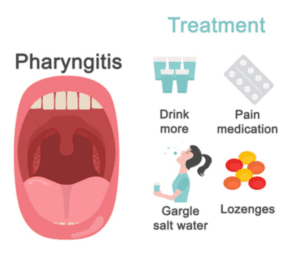
  • drinking plenty of fluids/ pedialyte popsicles
  • gargling with warm salt water (1 teaspoon of salt per 8 ounces of water)
  • using a humidifier
  • resting until you feel better
  • throat lozenges can sooth pain
Medical treatment
For pain and fever relief, consider taking over-the-counter medication such as acetaminophen or ibuprofen after speaking with your doctor.
If the infection is caused by strep or another bacterial infection, antibiotics are necessary. Amoxicillin and penicillin are the most commonly prescribed treatments for strep throat. It is important that you take the entire course of antibiotics for strep throat to prevent complications such as rheumatic fever.
How can you prevent pharyngitis?
  • avoid sharing food, drinks, and eating utensils
  • avoid individuals who are sick
  • wash your hands often, especially before eating and after coughing or sneezing
  • use alcohol-based hand sanitizers
  • avoid smoking and inhaling secondhand smoke
When to Seek Care
Let your doctor know right away if you are having a sore throat so that they can guide you on the next steps for evaluation of cause and best treatment options.

Looking for a doctor that you can text to reach quickly?

tips to prevent eczema flares

2023-11-13T13:53:38+00:00November 13th, 2023|Adults, Health Care, Public Health|

Winter is Coming:

5 Tips to Combat Dry Sensitive Skin!

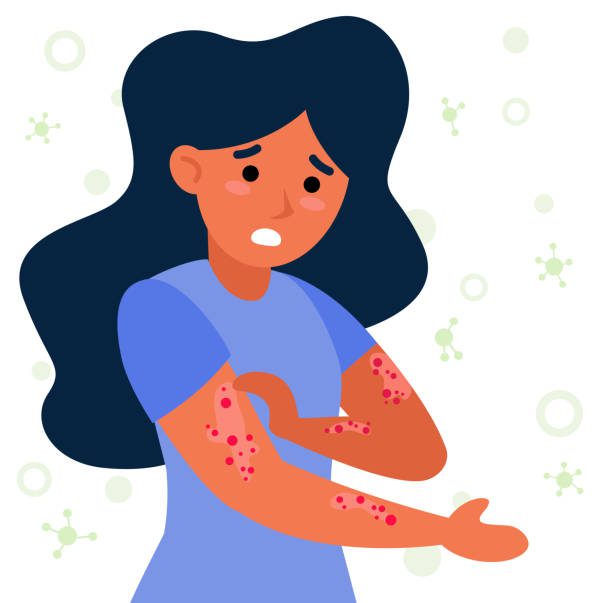
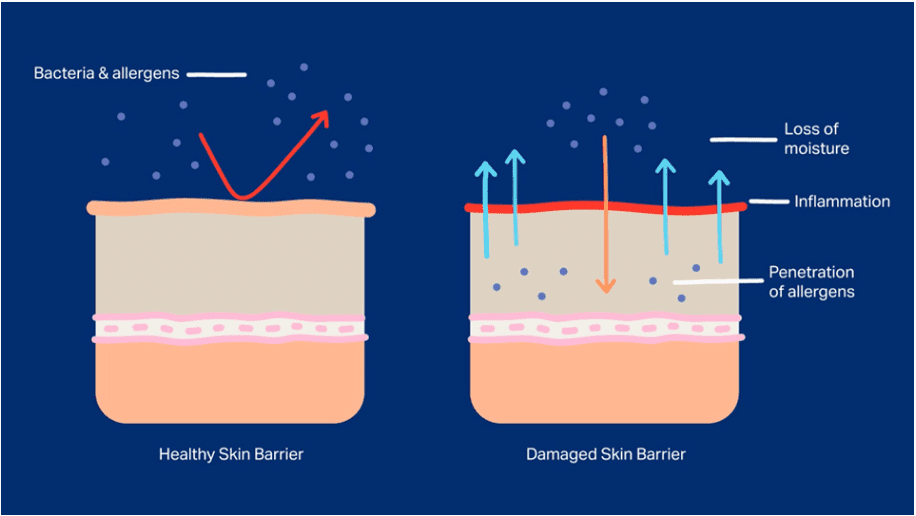
What is the largest organ in your body? SKIN! It is a protective shield and plays a crucial role in fending off infections. When this defensive layer is compromised… you can develop dryness, discomfort, and swelling. These are indicators that your skin is in need of care! To steer clear of such problems, adhere to these 5 recommendations to prevent flares…

Can you text your doctor for help…ANYTIME.. ANYWHERE?

Avoid Irritants

Highly sensitive skin is prone to irritation with perfumes, dyes, and chemicals found in everyday household products. The trick is to use hypoallergenic and fragrance-free products. Minimize flare-ups and itching by using fragrance-free soaps, shampoos, and detergents.

Be Temperature Aware

Pay attention to temperature and humidity. Take shorter baths with luke-warm temperature water. Avoid exposure to extreme heat/cold and wear 100% cotton allowing skin to breath. This helps with overheating and excessive sweating which can trigger a flare-up.

Moisturize

Unscented fragrance free moisturizers such as Cerave should be used regularly. Aquaphor can be used for tougher areas.

Supplement with Vitamin D

Vitamin D supplementation and direct sun exposure can lessen the severity of eczema symptoms and support your skin barrier and immune system. Vitamin D supplementation is a safe and tolerable therapy.

Partner with your physician

With eczema-friendly skin care and trigger management you can avoid eczema flares. Create a custom-tailored treatment plan that can include topical medications, specialized dressings, oral medications, or UV light therapy each of which has unique risks/benefits.

At Roots Health DPC we are putting CARE back in healthcare

HPV: Do you know the FACTS?

2023-11-07T08:35:42+00:00November 6th, 2023|Adults, Direct Primary Care, Families, Family Medicine, Family Practice, Health Care, Public Health|

HPV

70-80% of women will have Human Papilomaviurs, HPV, at some point in their lifetime. If it’s so common…. why does it matter?

HPV, is the most common sexually transmitted infection (STI) and HPV can cause cervical cancer.

So what can you do about it?

Putting CARE back in Health Care

What are the symptoms of HPV?
Most people with HPV do not have any symptoms which is why women need Pap smears.
HPV can sometimes cause genital warts. Some strains can cause cervical cancer.
Who should get tested for HPV at the time of their pap smear?
  • Most women younger than 30 do not get HPV testing, because the immune system often eradicates HPV. However, if their pap is abnormal an HPV test may be indicated.
  • Women 30 years or older, can be offered HPV test and Pap together to screen for cervical cancer.
How can I prevent HPV?
Get the HPV vaccine early, before age 26.
Avoid sexual contact and limit number of total partners.
Do I still need a Pap test if I got the HPV vaccine?
Yes. This is why:
  • Although the HPV vaccine protects against many of the HPV types that cause cervical cancer, it does not prevent all HPV types that cause cervical cancer.
  • You might not be fully protected if you did not get all the vaccine doses (or at the recommended ages).
  • You might not fully benefit from the vaccine if you were vaccinated after getting one or more types of HPV.

Looking for a doctor you know and trust that is easy to access?

Open Enrollment is Here

2023-10-30T14:03:30+00:00October 30th, 2023|Direct Primary Care, Family Medicine, Family Practice, Health Care, Public Health, Special Offer, Uncategorized|

What Your Open Enrollment is Missing!

Year after year, we pay more for our health insurance and receive less. Frustrated and overwhelmed trying to obtain the care needed and getting it covered by insurance… many have resigned themselves to the status quo. But we all deserve better. With open enrollment around the corner… now you have another choice.

Can you imagine if getting the care you needed was as easy as sending a text message to your doctor? What if you had an advocate to help you navigate and ensure your well-being was the top priority. We are putting the care back into healthcare and giving you all the power to make choices that will benefit your health and well-being. It’s time to get what you are paying for.

Direct Primary Care (DPC) DISCOVER THE BENEFITS

At Roots Health DPC, we help patients plan ahead, calculate projected yearly expenses, and choose an option that will save on out-of-pocket insurance costs while providing higher quality personalized care.


Direct Primary Care eliminates the hassle of traditional insurance-based care. With a low monthly fee, you gain direct access to the vast majority of your health care services. Enjoy more time with your physician, same-day and next-day appointments. No copays or hidden fees. Work directly with your DPC physician to obtain tremendous savings on all medications, labs, and imaging.

This year during open enrollment, let’s look at ALL your options.

Choose the best plan to meet your healthcare needs:
It’s your money.
It’s your healthcare.
It’s your choice.

Obtain the health care you deserve.

Don’t miss your opportunity this time around. Join the Roots Health DPC family today!

Early detection saves lives

2023-10-23T13:30:48+00:00October 23rd, 2023|Adults, Direct Primary Care, Families, Family Medicine, Family Practice, Health Care, Public Health|

Breast Cancer Warning Signs

Breast Cancer Screening is for women without symptoms. However, if you notice any signs of breast cancer you should see your doctor for an evaluation promptly regardless of when you were last screened.

Our patients have unlimited access. Anything. Anytime. Anywhere.

The warning signs of Breast Cancer:

1. If you notice a lump that feels firm or fixed in the breast or underarm area.

2. Swelling, warmth, redness or darkening of the breast skin.

3. Change in the size or shape of the breast including dimpling or puckering of skin.

4. Nipple retraction or change in position of nipple.

5. Discharge from your nipple.

Although the vast majority of breast cancers are found through abnormal mammograms, up to 30% of breast cancer patients present with a mass that occurs between mammograms.

Being proactive in your health choices improves your well-being.

Your Breast Cancer Screening Plan

2023-10-16T12:52:45+00:00October 16th, 2023|Adults, Direct Primary Care, Family Medicine, Family Practice, Health Care|

Breast Cancer Awareness Month – Screening

One out of eight women will be diagnosed with breast cancer. Do you know which screening test is best and when to start screening for breast cancer?

We are fostering awareness and prioritizing breast health.

There are many different screening tests for breast cancer and are varying recommendations from different organizations. Education with individualized planning (based on your personal risk for breast cancer) can help determine the best screening test for you.

-Mammography is the most common screening test for breast cancer
A mammogram is a low-dose X-ray of your breasts and can find cancer early.
Different experts have varying advice for when to initiate screening and how frequently to screen average-risk women ages 40 to 49. Everyone agrees that minimum screening should occur at least every 2 years between ages of 50-74.
For average-risk women screening mammography can be performed every one to two years based on patient preference.
-Magnetic resonance imaging (MRI) may be used to screen women who have a high risk of breast cancer
MRI is a procedure that uses a magnet, radio waves, and a computer to make a series of detailed pictures. MRI does not use any x-rays and there is no exposure to radiation.
Ultrasound is used in women with moderately increased risk factors (based on breast density, reproductive history, and hormonal history), breast ultrasound in conjunction with mammogram or a MRI can be considered on an individual basis.

Empower Your Breast Health: Discover the Best Screening Options

Breast Cancer Awareness

2023-10-09T15:41:49+00:00October 9th, 2023|Adults, Direct Primary Care, Family Medicine, Health Care, Public Health|

October is Breast Cancer Awareness Month

Many of us have been touched by knowing someone with breast cancer. It is, after all, is the most frequently diagnosed cancer and leading cause of cancer death in women.

We are raising awareness and prioritizing breast health.

Education is the Key to Prevention
Know the risk factors associated with an INCREASED risk for breast cancer:
  • Hormonal factors influence your risk for breast cancer. Speak with your physician about your personal risk associated with hormonal therapies.
  • Reproductive factors associated with a higher breast cancer risk include earlier onset of menstruation, not giving birth or having first child later in life, and a late menopause.
  • Family history and genetic mutations. The risk of breast cancer is affected by the number of first-degree female relatives diagnosed with breast cancer and the age at which they were diagnosed.
  • The highest breast cancer risk occurs among White women (although it remains he most common cancer among women of every major ethnic/racial group).
Know how to DECREASE your risk for breast cancer:
  • Breastfeeding. For every 12 months of breastfeeding there is an approximate 4% reduction in the relative risk of breast cancer.
  • Increased physical activity at all ages lowers risk.
  • Routine screening and regular self-breast exams

Empower yourself to take proactive steps for your breast health and well-being.

Give yourself the gift of TIME

2023-09-25T12:57:16+00:00September 25th, 2023|Uncategorized|

Your TIME is VALUABLE

YOUR TIME is the most valuable resource you have. Give yourself the gift of TIME.
You work hard to balance time between your career and your family. When one of your own has a health concern that “pops up” or just needs to be scheduled …. trying to figure out the how, where, and when to get the issue addressed can literally take hours, and even days, from your routine.
I get it. I’m a working mom and I know what it is like to balance work and family, to “carry” the mental load, and then…. to put “one more thing” on your plate. My job is to take that stress off your plate.
“My son has a sore throat and fever…. I have placed a call to his doctor’s office and am waiting for a call back….”
When you have medical concerns, the last thing you need is to pile on more stress. Let me help! My patients reach out to me, their physician, directly via text at any time of day. They get answers to the questions they have about their health immediately and can take the next steps and get back to their busy lives.

We also offer telemedicine so you can get care wherever you are.

“My daughter cut open her foot. Do I take her to urgent care or ER and wait to be seen?”
I don’t know anyone who has time to wait around for a return call from the doctor’s office or wait into a waiting room. We take care of this for you…. without the wait!
“I am experiencing a constant feeling of being tired… but I just put off going to see the doctor because it is so hard to get an appointment and the visit takes up half my day.”
Let us make going to the doctor as easy as booking a time that works perfectly for your schedule and then coming in to be seen. We don’t have a “waiting room.”

THIS IS NOT too good to be true!

See for yourself how Direct Primary Care works… and get all your questions answered

What you need to know about Sleep Apnea

2023-09-18T12:40:24+00:00September 18th, 2023|Uncategorized|

SLEEP APNEA

Did you know that daytime fatigue, trouble concentrating, headaches, and many other symptoms can be caused by sleep apnea?

Learn about sleep apnea and signs that it might be affecting your health.

Sleep apnea is commonly under-diagnosed . Education is key.

What are the symptoms of sleep apnea?
Snoring is the most obvious sign and more common in men. Other signs and symptoms of OSA (Obstructive Sleep Apnea) include:
  • Daytime sleepiness or fatigue
  • Restlessness during sleep, frequent nighttime awakenings
  • Sudden awakenings with a sensation of gasping or choking
  • Dry mouth or sore throat upon awakening
  • Cognitive impairment, such as trouble concentrating, forgetfulness or irritability
  • Mood disturbances (often dismissed as depression or anxiety which can co-exist with sleep apnea)
  • Night sweats
  • Frequent nighttime urination
  • Sexual dysfunction
  • Headaches

Diagnosis and treatment for sleep apnea are extremely important for your long term health.

How is sleep apnea diagnosed?

Speak with your primary care physician about your symptoms suggestive of sleep apnea. An overnight sleep study can objectively evaluate for sleep apnea.

How is sleep apnea treated?
The treatment for sleep apnea is extremely individualized and based on the underlying cause. Conservative therapies targeting the underlying cause may include:
  • Weight loss
  • Sleep position changes
  • Treatment for underlying sinus or nasal congestion
  • CPAP (continuous positive airway pressure) machines or other mechanical therapy
  • Dental appliances that keep the airway open
  • Surgical procedures are usually reserved for unresponsive cases

Want a physician who has enough time to fully evaluate your health concerns and get to the root cause of your symptoms? Schedule a FREE “Meet and Greet” at Roots Health DPC.

No waiting. Healthcare delivered when you need it.
Go to Top